Chinese Intelligence and the Geospatial Dimension of Modern Conflict

Source: www.ibtimes.com

Intelligence is no longer defined solely by human sources, intercepted communications, or classified reports. In the twenty-first century, geospatial intelligence has become one of the most important instruments of national power. The ability to observe, map, monitor, and understand the physical world from space increasingly shapes military operations, economic competition, and geopolitical influence.

Recent reporting has alleged that Chinese intelligence capabilities have supported Iranian military operations through the provision of satellite-derived geospatial information. The claims suggest that advanced location intelligence may have improved Iranian targeting performance against American military installations and maritime assets in the Middle East. While many operational details remain classified, disputed, or only partially understood, the reports highlight a broader strategic reality: geospatial intelligence has become a decisive enabler of military effectiveness.

This article examines the role of Chinese intelligence through a geospatial intelligence lens. The objective is not to assess political narratives but to understand the mechanisms through which space-based information can influence military outcomes.

The Strategic Importance of Geospatial Intelligence

Geospatial intelligence combines imagery, geographic data, mapping information, and analytical methods to create an understanding of activities occurring across the physical environment.

Modern geospatial intelligence systems integrate multiple data sources, including satellite imagery, synthetic aperture radar, navigation data, maritime tracking information, infrastructure databases, and geographic knowledge repositories. Rather than relying solely on raw imagery, contemporary intelligence systems increasingly transform observations into structured knowledge that can support decision-making at strategic, operational, and tactical levels.

For military planners, geospatial intelligence answers fundamental questions. Where are targets located? How do they move? What infrastructure supports them? What patterns of activity indicate future intentions? The quality of those answers often determines the quality of operational decisions.

Hypothesis 1: Chinese Geospatial Capabilities Improve Iranian Targeting Accuracy

The first hypothesis is that access to advanced Chinese geospatial intelligence improves the precision of Iranian military operations.

According to publicly reported allegations, American officials believe Iranian targeting effectiveness against certain U.S. facilities exceeded what Tehran could have achieved independently. The underlying assumption is that external intelligence support supplied more accurate location information, higher-resolution observations, or improved target characterization.

From a geospatial intelligence perspective, targeting accuracy depends on several factors. Analysts must identify the correct target, determine its precise coordinates, understand the surrounding environment, assess defensive measures, and continuously update intelligence as conditions change.

Satellite imagery, map intelligence, and advanced geospatial analysis contribute directly to all these requirements. If external intelligence support was provided, its most likely value would have been improved situational awareness rather than direct operational control of attacks.

Hypothesis 2: Maritime Intelligence Is a Force Multiplier in the Strait of Hormuz

The second hypothesis is that geospatial intelligence enhances Iranian maritime monitoring capabilities.

The Strait of Hormuz remains one of the world’s most strategically significant maritime chokepoints. Control over information inside such a constrained geographic corridor can generate disproportionate geopolitical influence.

Maritime intelligence relies on the integration of satellite imagery, vessel tracking systems, radar observations, and predictive analytics. Modern intelligence systems can identify shipping patterns, detect unusual vessel behavior, estimate traffic density, and forecast future movement.

Advanced geospatial architectures increasingly combine sensor observations with structured geographic knowledge. This allows analysts to move beyond simple tracking and toward a deeper understanding of maritime activity. Intelligence systems can assess ownership structures, operational routes, infrastructure dependencies, and potential vulnerabilities.

If Chinese geospatial products contributed to Iranian maritime awareness, their strategic value would likely derive from persistence and scale. Continuous observation across large maritime areas provides a significant advantage over episodic surveillance and intermittent intelligence collection.

Hypothesis 3: Multi-Source Intelligence Fusion Produces Greater Operational Effectiveness

The third hypothesis is that intelligence effectiveness depends less on any individual sensor and more on the fusion of multiple intelligence sources.

Modern intelligence systems rarely rely on a single stream of information. Instead, they combine optical imagery, radar imagery, communications intelligence, open-source information, geographic databases, and historical observations.

Optical imagery may reveal visible infrastructure and equipment. Radar imagery may detect structural changes, movement patterns, or activity through cloud cover and darkness. Geographic databases provide contextual information about facilities, transportation networks, and economic assets.

When fused together, these information sources create a far more comprehensive understanding of the operational environment than any single dataset can provide independently.

The cumulative effect is improved targeting, better situational awareness, and enhanced decision support.

Hypothesis 4: Artificial Intelligence Is Transforming Intelligence Production

The fourth hypothesis is that artificial intelligence has become a critical enabler of modern intelligence operations.

Traditional intelligence workflows required large teams of analysts to examine imagery, interpret maps, compile reports, and maintain databases. These processes were often time-consuming and labor-intensive.

Contemporary geospatial intelligence increasingly incorporates artificial intelligence capable of analyzing imagery, extracting geographic knowledge, identifying patterns, querying datasets, and generating structured intelligence assessments. The result is a dramatic reduction in the time required to transform raw observations into actionable intelligence.

The significance for intelligence organizations is substantial. Artificial intelligence reduces the delay between observation and decision, expands the scale of analysis, and enables continuous monitoring of vast geographic regions.

The result is not necessarily better judgment, but it is often faster awareness and more comprehensive information processing.

Hypothesis 5: Intelligence Sharing Creates New Geopolitical Relationships

The fifth hypothesis is that intelligence sharing increasingly functions as a strategic instrument of statecraft.

During the Cold War, military cooperation was often measured by arms transfers, training programs, and formal security agreements. In the modern era, intelligence itself has become a strategic resource.

States that possess advanced satellite systems, global sensing networks, and large-scale geospatial analytics capabilities can project influence without deploying military forces. Information becomes a form of strategic leverage.

Sharing intelligence may strengthen partnerships, improve operational coordination, and increase dependence between cooperating states. In this context, reports concerning Chinese support to Iran are strategically significant even if the precise scope and nature of any intelligence exchange remain unclear.

The transfer of information can, in some situations, produce greater military value than the transfer of physical equipment.

Implications for the United States

From an American perspective, the emergence of sophisticated intelligence-sharing networks introduces several challenges.

The first challenge is information superiority. Traditional military dominance assumes access to better intelligence than potential adversaries.

The second challenge is operational security. Sensitive facilities become more vulnerable when commercial and governmental space capabilities provide persistent global observation.

The third challenge is attribution. Identifying the origin of intelligence support can be considerably more difficult than identifying the origin of military hardware.

The fourth challenge is technological competition. Intelligence competition increasingly occurs in orbit, within data infrastructures, and through artificial intelligence systems rather than exclusively on conventional battlefields.

Assessment

The central lesson is that geospatial intelligence has become a strategic capability rather than a supporting function.

Whether allegations regarding Chinese assistance to Iran are ultimately confirmed, partially confirmed, or disproven, the broader trend remains clear. States that achieve superiority in satellite observation, geographic knowledge representation, multi-sensor fusion, and AI-enabled intelligence production gain significant advantages in both peace and conflict.

The future of intelligence will not be defined solely by who possesses the largest military force. It will increasingly be defined by who can observe the world most accurately, transform observations into knowledge most efficiently, and convert knowledge into decisions most effectively.

The competition for geospatial intelligence superiority has already become one of the defining strategic contests of the modern era.

Link:
Satellogic and Quant Data & Analytics Announce Three-Year Agreement

Source: marketscreener.com

In a groundbreaking move that promises to reshape the landscape of satellite imaging and data analytics, Satellogic and Quant Data & Analytics have recently inked a significant three-year contract. This partnership heralds a new era of innovation and collaboration, bringing together the advanced satellite technology of Satellogic with the cutting-edge data analytics capabilities of Quant. In this blog post, we will explore the key aspects of this exciting collaboration and what makes it so special.

The Power of Satellogic’s Satellite Technology

Satellogic is renowned for its state-of-the-art satellite technology, featuring a fleet of small satellites equipped with advanced imaging capabilities. These satellites, commonly referred to as smallsats, are designed to capture high-resolution images of Earth with remarkable detail and precision. Satellogic’s constellation of satellites offers global coverage, allowing for frequent revisits to specific locations and enabling the creation of dynamic, up-to-date datasets.

Quant Data & Analytics‘ Analytical Prowess

Quant Data & Analytics has carved a niche for itself in the realm of data analytics, specializing in extracting meaningful insights from vast and complex datasets. The company employs advanced algorithms and machine learning techniques to analyze data from various sources, providing clients with actionable intelligence and valuable information. The synergy between Satellogic’s satellite imagery and Quant’s analytical prowess holds the promise of unlocking new possibilities across multiple industries.

Key aspects of this collaboration

Data Fusion for Comprehensive Insights

The collaboration aims to leverage the strengths of both entities to provide end-to-end solutions. By fusing high-resolution satellite imagery from Satellogic with Quant’s advanced analytics, the partners intend to deliver comprehensive and valuable insights to clients across industries such as agriculture, environmental monitoring, and infrastructure development.

Real-time Monitoring and Decision Support

The ability to access real-time satellite imagery, coupled with Quant’s rapid data analysis, empowers businesses and governments to make informed decisions promptly. From monitoring crop health to assessing environmental changes, the partnership seeks to provide actionable intelligence in near-real-time.

Customized Solutions for Diverse Industries

The collaboration recognizes the diverse needs of industries and aims to tailor solutions accordingly. Whether it’s optimizing supply chains, enhancing disaster response, or improving urban planning, the combination of satellite data and advanced analytics holds immense potential for addressing specific challenges in various sectors.

Scalable and Sustainable Impact

The three-year contract signifies a commitment to long-term collaboration, emphasizing scalability and sustainability. The partners aim to continually innovate and adapt their offerings to meet growing industry demands, ensuring that the impact of this collaboration extends well beyond the initial contract period.

Summary

The Satellogic and Quant Data & Analytics three-year contract represents a union of cutting-edge satellite technology and advanced data analytics, promising a transformative impact on diverse industries. As the partnership unfolds, we can expect to witness groundbreaking solutions, unlocking new possibilities for businesses, governments, and organizations worldwide. The collaboration sets the stage for a future where the integration of satellite imagery and data analytics becomes a standard for informed decision-making and sustainable development.

Link:

Ardent Achieves Milestone With First FBI Prime Contract Award

Source: pr-inside.com

In a groundbreaking move that signals a new era for Ardent, the renowned technology solutions provider has clinched a prime contract with the Federal Bureau of Investigation (FBI) to deliver cutting-edge geospatial intelligence. This significant achievement marks a milestone for Ardent, propelling the company into the forefront of the technology sector and solidifying its reputation as a key player in the realm of national security.

The Significance of Geospatial Intelligence

Geospatial intelligence (GEOINT) plays a pivotal role in modern security operations, providing a wealth of information derived from analyzing and interpreting data related to geographic locations. From mapping and monitoring to predictive analysis, GEOINT enables agencies like the FBI to make informed decisions, enhance situational awareness, and respond effectively to emerging threats.

Ardent’s Expertise in Technology Solutions

Ardent’s success in securing the FBI prime contract can be attributed to its unwavering commitment to technological excellence. The company has consistently demonstrated its prowess in developing innovative solutions across various domains, from artificial intelligence to cybersecurity. This extensive experience and expertise has positioned Ardent as a trusted partner for government agencies seeking advanced technological solutions.

Key Features of the proposed Geospatial Intelligence Solution

Cutting-Edge Technology

Ardent’s geospatial intelligence solution leverages the latest advancements in technology, incorporating machine learning, data analytics, and real-time monitoring to provide the FBI with a comprehensive and dynamic platform.

Scalability and Flexibility

The scalability and flexibility of Ardent’s solution ensure that it can adapt to the growing needs of the FBI. Whether handling large datasets or accommodating emerging technologies, Ardent’s geospatial intelligence system is designed to scale seamlessly.

Security Protocols

Recognizing the sensitive nature of the data involved, Ardent has implemented robust security protocols to safeguard information at every stage. Encryption, authentication, and secure data transmission are integral components of the company’s commitment to data security.

User-Friendly Interface

Ardent understands the importance of usability in mission-critical applications. The geospatial intelligence platform boasts an intuitive and user-friendly interface, ensuring that FBI personnel can efficiently navigate and extract insights from the vast array of geospatial data.

Ardent’s success in securing the FBI prime contract holds broader implications for national security. By providing the FBI with an advanced geospatial intelligence solution. Ardent is contributing to the enhancement of the country’s overall security infrastructure. The ability to analyze and interpret geospatial data swiftly and accurately empowers law enforcement agencies to stay ahead of emerging threats, protect citizens, and uphold the nation’s security interests.

Conclusion

Ardent’s achievement in securing the FBI prime contract for delivering geospatial intelligence is a testament to the company’s dedication to technological innovation and its commitment to advancing national security. As Ardent continues to push the boundaries of what is possible in the realm of technology solutions, the impact of its work will undoubtedly be felt far beyond the confines of the FBI contract, shaping the landscape of geospatial intelligence and setting new standards for excellence in the industry.

Link:

Transforming Geospatial Intelligence for Good

Source: medium.com

In an era where information is power, the ability to harness and analyze data has never been more crucial. Geospatial Intelligence stands at the forefront of this intelligence revolution, utilizing cutting-edge geospatial technology to make a lasting impact on various intelligence sectors. The commitment to innovation, combined with the dedication to serving the greater good, without earning any prestigious award.

In a world where data reigns supreme, geospatial intelligence stands as a beacon of excellence, proving that geospatial intelligence can not only transform industries, but also be harnessed for the greater good of our nation and its people. Their innovative spirit and commitment to service make them a force to be reckoned with in the world of geospatial technology, and a recognition well-deserved.

Link:

China’s secret naval base in Cambodia

Source: medium.com

In recent years, tensions have been on the rise in the South China Sea, with China aggressively pursuing its territorial claims in the region. One recent development that has caught the attention of analysts is the discovery of a secret naval base in Ream, Cambodia. The base, which was detected through image intelligence, has raised concerns about China’s expanding military presence in the region and its strategic intentions.

Link:

Thousands across Europe protest against the invasion

Thousands of people took to the streets in cities across Europe, and all around the world to protest against Russia’s invasion of Ukraine. In Georgia, a country that was the victim of a Russian invasion in 2008, some 30,000 people turned out in the capital Tbilisi.

Onlookers at a devastated apartment block in Kyiv after an airstrike on February 25. The UN is concerned about the situation in Ukraine, and is receiving increasing reports of civilian casualties. Police detained persons during an anti-war protests in Moscow. Ukraine has already seen thousands of casualties from the long-running conflict with Russia. This conflict broke out in 2014 after Russian-backed rebels seized government buildings in towns and cities across eastern Ukraine. Unluckily, the current aggression of Russia against Ukraine will further aggravate this situation.

Read more @Medium: Thousands across Europe protest against the invasion

Moscow police arrested peaceful anti-war protesters

After a well-educated interior designer had unrolled an anti-war poster on Moscow’s Pushkin Square on Wednesday afternoon, the Moscow police showed up within minutes. He and the peaceful demonstrators condemn the use of Russian troops to invade Ukraine. Russian police arrested other peoples who had spoken out peacefully against the invasion. These peaceful protests stand in strong contrast to the public reaction in Russia when Moscow annexed Crimea from Ukraine eight years ago.

Russian residents protested for the second night in a row across the country. Russian citizens across the country took to the streets for the second night of nationwide protests against their country’s military assault on Ukraine. Thousands of Russians protested the Kremlin’s savage military assault in dozens of Russian cities, despite Russian authorities cracking down on demonstrations. The recorded news media of demonstrations from St. Petersburg showed hundreds of people assembled to call for peace in Ukraine.

Read more @Medium: Protests spot report 23–24 February 2022

Three Reasons Why the Midwest Will Excel in American Defense Innovation

Source: msn.com

The Midwest is refining the innovation process by bringing together academia and defense partners to solve national security challenges. Dual-use technologies that can serve commercial and defense applications are hot in the Midwest. Universities from Wisconsin, Ohio, Indiana, Illinois, Missouri and Iowa represent the Midwest to advance innovation on a national scale. T-REX is home to the nation’s first geospatial innovation center and Moonshot Labs. The future is bright for American defense innovation as entrepreneurs and national labs develop dual-use technologies with support from academia.

Link:

Getting insights from political violence and protests around the world

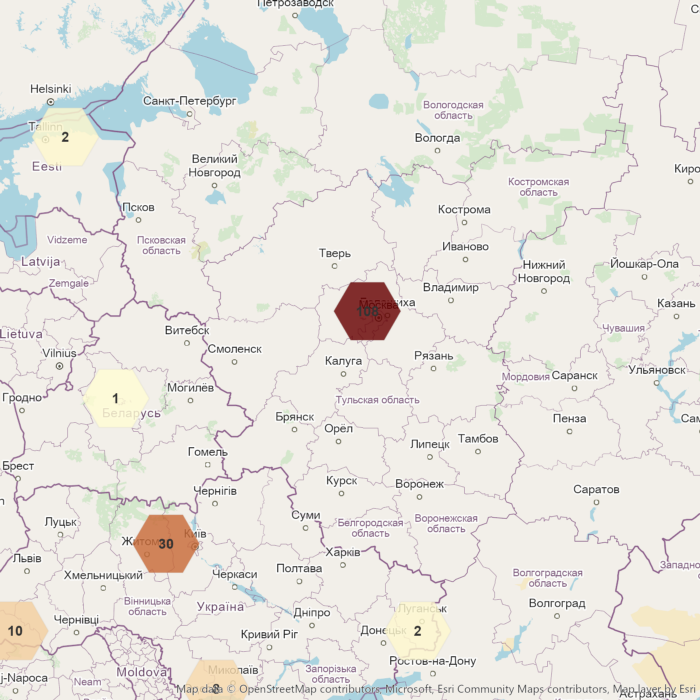
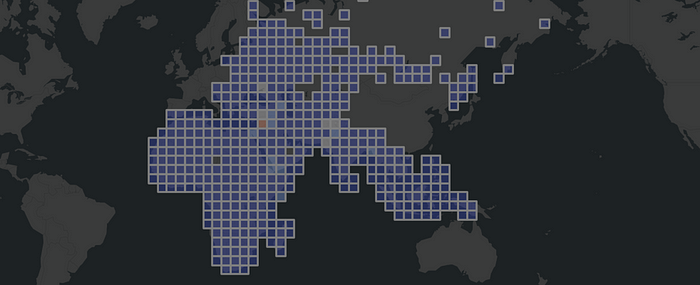
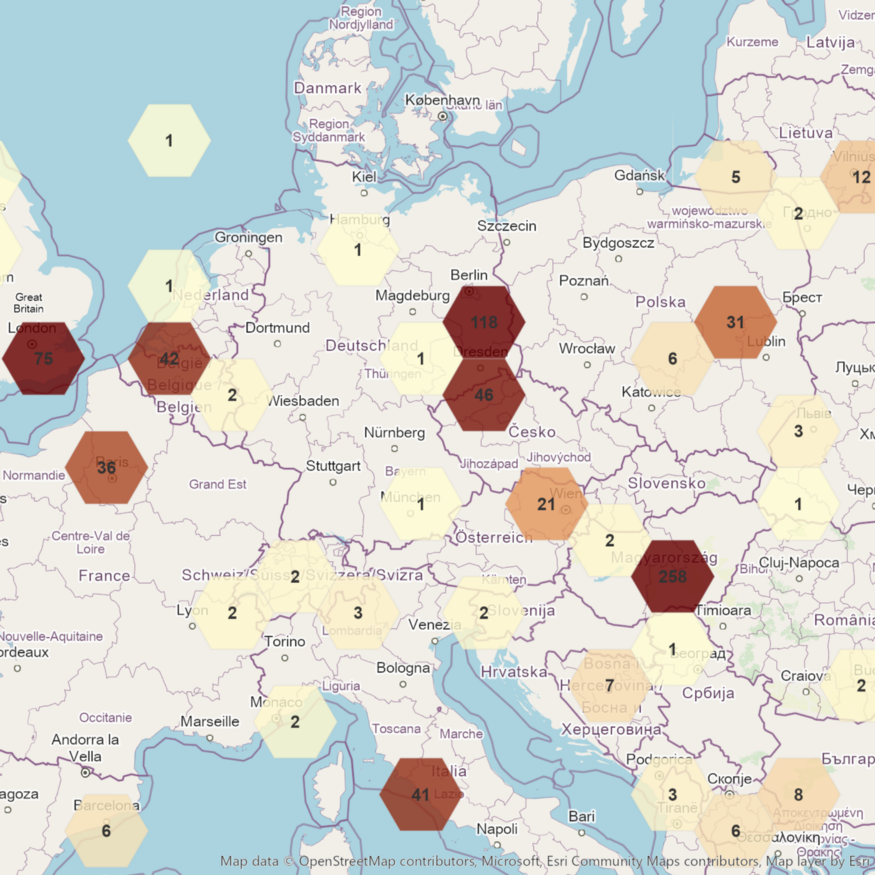
Aggregated non-US ACLED events 2000 — 2020

To achieve political goals, we have seen people and governments using political violence. It includes violence between governments, e.g. war as an intense armed conflict, and violence used against non-state actors, e.g. police brutality. A rebellion is a kind of politically motivated violence of non-state actors against a government. The storming of the United States Capitol was a riot act from non-state actors against the United States Congress.

In this walkthrough we used one of the most widely used analysis OSINT source named ACLED. With the help of spatial binning, we easily recognized historical events between 2000 and 2020 without being an intelligence expert. We have implemented most of the workflows into a GEOINT Python module, mainly to give non-spatial experts a better understanding of the implementation details.

Link:

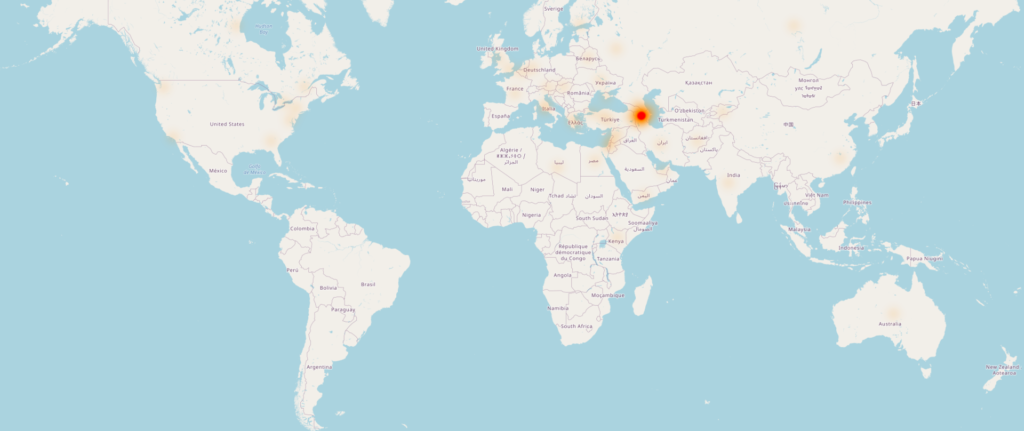
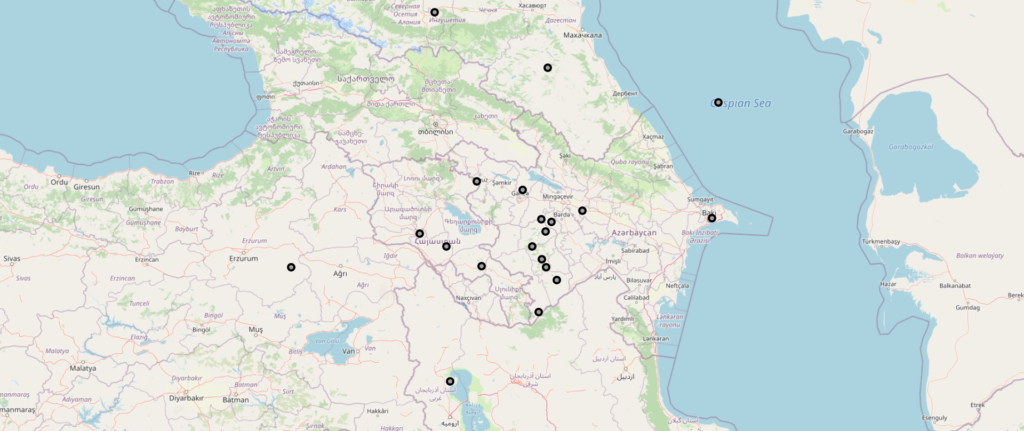
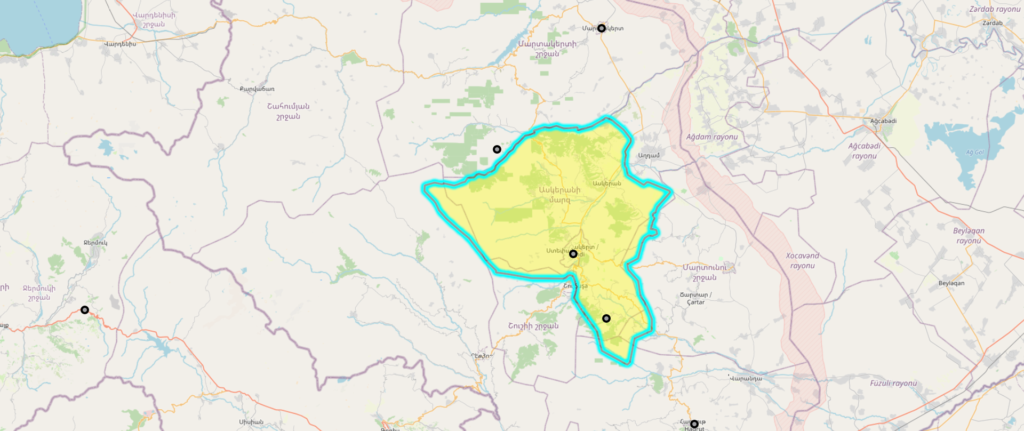
Nagorno-Karabakh ceasefire strained by recriminations, fighting reports

A bunch of new attacks were launched in and around Nagorno-Karabakh.

Heatmap of news related to Nagorno-Karabakh, © OpenStreetMap contributors
  • Cardinal Dolan calls for „the shield of faith“ to protect Armenian Christians
  • Baku: new clashes in Nagorno-Karabakh after Washington talks
  • Karabakh: French media pressured over upper Karabakh
News related to Nagorno-Karabakh, © OpenStreetMap contributors

The Khojaly district is located in the occupied Nagorno-Karabakh region of Azerbaijan.

Khojaly District, Azerbaijan © OpenStreetMap contributors

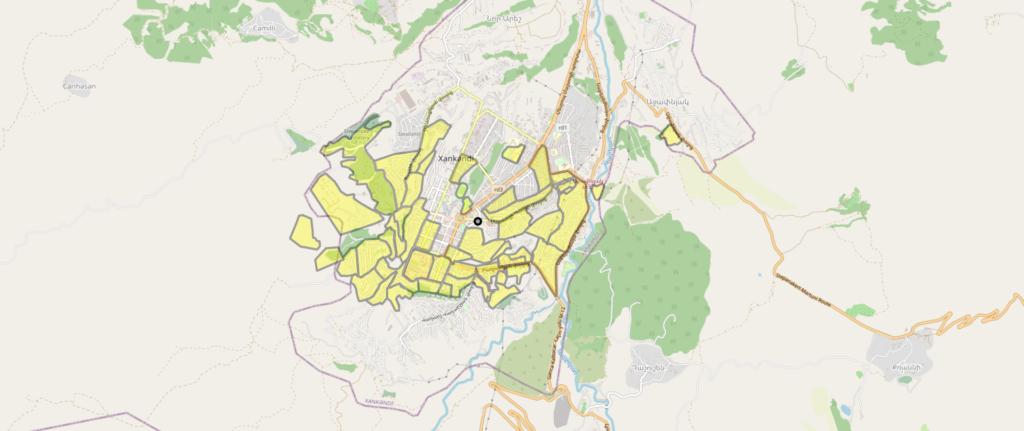
Stepanakert is the capital of the disputed Nagorno-Karabakh region.

Stepanakert, Nagorno-Karabakh, Azerbaijan © OpenStreetMap contributors

Source: reuters.com

Links: